This website is managed by Ultima Markets’ international entities, and it’s important to emphasise that they are not subject to regulation by the FCA in the UK. Therefore, you must understand that you will not have the FCA’s protection when investing through this website – for example:
You will not be guaranteed Negative Balance Protection
You will not be protected by FCA’s leverage restrictions
You will not have the right to settle disputes via the Financial Ombudsman Service (FOS)
You will not be protected by Financial Services Compensation Scheme (FSCS)
Any monies deposited will not be afforded the protection required under the FCA Client Assets Sourcebook. The level of protection for your funds will be determined by the regulations of the relevant local regulator.
Note: UK clients are kindly invited to visit https://www.ultima-markets.co.uk/. Ultima Markets UK expects to begin onboarding UK clients in accordance with FCA regulatory requirements in 2026.
If you would like to proceed and visit this website, you acknowledge and confirm the following:
1.The website is owned by Ultima Markets’ international entities and not by Ultima Markets UK Ltd, which is regulated by the FCA.
2.Ultima Markets Limited, or any of the Ultima Markets international entities, are neither based in the UK nor licensed by the FCA.
3.You are accessing the website at your own initiative and have not been solicited by Ultima Markets Limited in any way.
4.Investing through this website does not grant you the protections provided by the FCA.
5.Should you choose to invest through this website or with any of the international Ultima Markets entities, you will be subject to the rules and regulations of the relevant international regulatory authorities, not the FCA.
Ultima Markets wants to make it clear that we are duly licensed and authorised to offer the services and financial derivative products listed on our website. Individuals accessing this website and registering a trading account do so entirely of their own volition and without prior solicitation.
By confirming your decision to proceed with entering the website, you hereby affirm that this decision was solely initiated by you, and no solicitation has been made by any Ultima Markets entity.
Ultima Markets does not have an establishment in Singapore and does not operate from Singapore.
Ultima Markets does not provide products or services to citizens or residents of Singapore, and account applications from Singapore citizens or residents will not be accepted.
If you are a citizen or resident of Singapore, please do not open an account or use Ultima Markets’ products or services.
By selecting “Acknowledge and Continue Browsing”, you confirm that you are accessing this website on your own initiative and that your access is not the result of any direct marketing, targeted advertising, solicitation, or promotional activity by Ultima Markets.
Nothing on this website constitutes an offer, solicitation, or promotion of products or services in any jurisdiction where such activity is prohibited. You are responsible for ensuring that your access to and use of this website complies with applicable local laws and regulations.
Discover which countries have the most oil fields, where untapped reserves lie, and why oil is such a valuable commodity to trade within global markets.
Oil is one of the most vital commodities traded globally, acting as a fundamental energy source for industries, transportation, and power generation. The global demand for oil drives its high trading value and directly influences prices in financial markets.
To understand why oil is so valuable, it’s important to explore where oil comes from, which countries have the largest oil fields, and the potential of untapped reserves.
In this article, we will examine the top oil-producing nations, the future potential of untapped oil reserves, and why oil continues to be a key commodity in global trading.
Where Does Oil Come From?
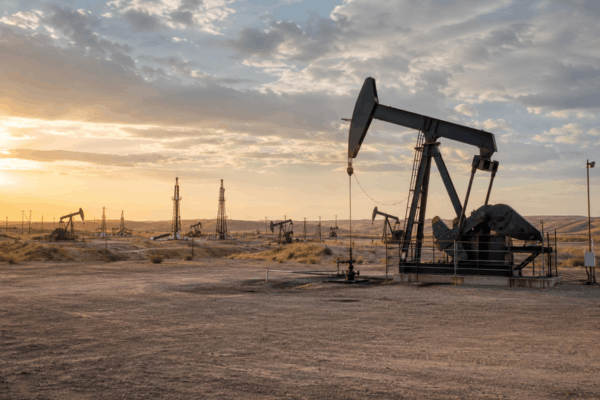
Oil is formed over millions of years from the remains of marine organisms, such as plankton and algae. These organic materials are buried by sediment, and through intense heat and pressure, they are transformed into crude oil. The oil accumulates in porous rock formations known as oil reservoirs. Drilling is required to extract this oil, which is then transported to refineries for further processing into products like gasoline, diesel, and jet fuel.
Globally, oil reserves are found in various regions, with countries boasting both conventional oil fields and more challenging extraction areas, such as offshore platforms or shale formations. The ease with which oil can be extracted, and the technology required, play an important role in determining the cost of extraction and, subsequently, the market price.
The Countries with the Most Oil Fields
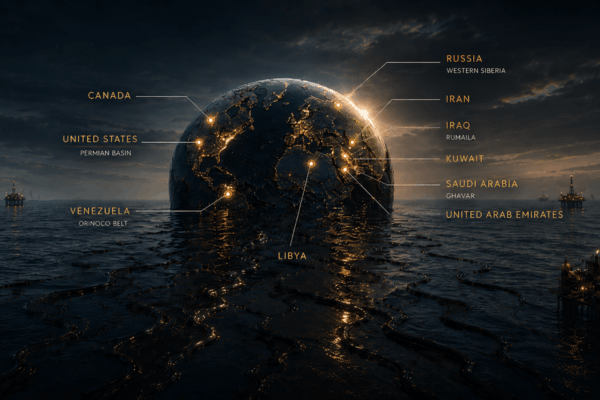
Several countries hold the lion’s share of the world’s oil fields, and these fields are key to understanding the global supply and pricing of oil. Here are the leading countries in oil production:
Saudi Arabia
Saudi Arabia is home to some of the world’s largest and most productive oil fields. The Ghawar Field, the largest conventional oil field globally, has been in operation for over 60 years and remains a cornerstone of Saudi Arabia’s oil production.
With its vast reserves and immense production capacity, Saudi Arabia is the world’s largest exporter of oil, largely due to its oil fields that span both onshore and offshore locations.
Venezuela
Venezuela has the largest proven oil reserves globally, estimated to hold over 300 billion barrels. The Orinoco Belt, located in the east, is rich in extra-heavy crude, which is more difficult to extract.
Despite having vast reserves, Venezuela’s oil production has declined drastically due to political and economic instability, as well as the challenges of extracting such dense crude oil.
Russia
Russia possesses extensive oil fields, particularly in Western Siberia, making it one of the world’s top oil producers. While Russia’s reserves do not rival those in the Middle East, it remains a key player in global oil markets, ranking consistently as one of the largest oil exporters. Russian oil fields include both conventional and unconventional reserves, such as shale oil.
United States
The United States is home to several large oil fields, especially in Texas, North Dakota, and Alaska. The Permian Basin in Texas is the largest shale oil reservoir globally, and the advent of hydraulic fracturing (fracking) has dramatically increased U.S. oil production.
As a result, the U.S. has become one of the world’s leading producers of oil, with significant contributions from its shale oil fields.
Iraq
Iraq has some of the largest oil fields globally, including the Rumaila and Kirkuk fields. Iraq’s oil reserves are significant not only due to their size but also their proximity to key shipping routes, making the country a major player in global oil trade.
Despite political instability, Iraq continues to be a major oil exporter, and its production potential is enormous.
Untapped Oil Reserves: The Hidden Potential
While many countries have significant oil reserves, there is still considerable potential in untapped reserves. These untapped oil reserves are key to future production growth and will likely play an important role in the global oil market as the demand for energy increases. Here are some regions with untapped reserves:
Venezuela: The Orinoco Belt
Venezuela’s Orinoco Belt is home to some of the largest untapped oil reserves in the world, with estimates suggesting over 1 trillion barrels of oil in place. However, the extraction of this oil is challenging due to the extra-heavy nature of the crude. Technological advancements in extraction methods could unlock these vast reserves, but political and economic factors have slowed development.
Saudi Arabia: Further Exploration
Although Saudi Arabia is home to some of the world’s largest oil fields, the country continues to explore new layers within existing fields, such as Ghawar.
Additionally, offshore oil reserves and the use of enhanced oil recovery techniques may uncover untapped layers of crude. Saudi Arabia’s ongoing exploration and production efforts ensure its continued dominance in global oil supply.
United States: Shale Oil and Offshore Reserves
The United States has extensive untapped oil reserves, particularly in its Permian Basin shale formations. The development of fracking technology has made these reserves more accessible, and the U.S. is expected to continue increasing production from these fields. The country also has offshore reserves, particularly in the Arctic and the Gulf of Mexico, which could significantly boost its oil output.
Russia: Siberian Oil Fields
Russia’s Siberian oil fields remain largely underexplored. While Russia is already a major producer, significant untapped reserves lie in deeper and more challenging areas. With the right investments in technology and infrastructure, these reserves could play a major role in future oil production.
Why Oil Prices Are Worth So Much to Trade
Oil prices are one of the most volatile and closely watched indicators in global financial markets. Several key factors contribute to the high value of oil and its status as one of the most traded commodities in the world.
1. Global Demand for Energy
Oil is the primary energy source for industries, transportation, and power generation. As economies grow and industrialisation continues, the global demand for oil rises, making it a critical commodity in the energy sector. This demand ensures that oil remains valuable for trading, as it powers much of the world’s infrastructure.
2. Limited Supply and High Extraction Costs
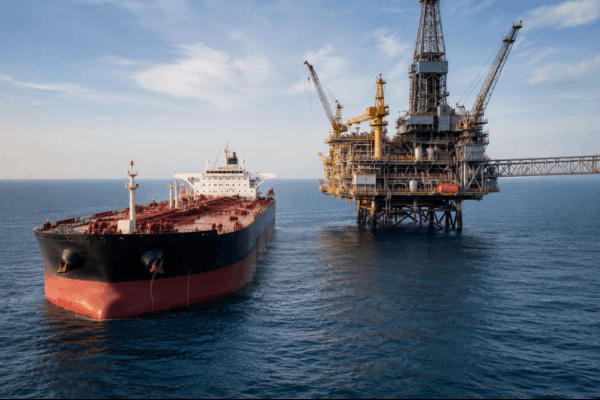
Although many countries possess significant oil reserves, the ability to extract oil from these reserves is not always simple. Some reserves are located in difficult-to-reach areas, such as deep offshore fields or shale formations. These reserves require advanced technology and significant investment to access, which drives up extraction costs and, in turn, oil prices.
3. Geopolitical Factors
Oil is deeply tied to geopolitical events, and political instability in key oil-producing regions can cause significant fluctuations in oil prices. For example, the recent exit of the UAE from OPEC+ has created uncertainty about future production quotas, which could lead to supply disruptions and price volatility.
Additionally, conflicts in the Middle East, changes in government policies, and trade disputes can all influence oil prices.
4. Economic Impact
Oil prices directly affect inflation, transportation costs, and manufacturing expenses. As one of the most essential commodities for the global economy, fluctuations in oil prices can have a ripple effect across various sectors.
Higher oil prices can lead to higher costs for goods and services, impacting economic stability. Conversely, lower oil prices can signal a slowdown in economic activity, affecting market sentiment.
Conclusion
Oil fields and untapped reserves are central to understanding the global oil market. Countries with vast reserves, such as Saudi Arabia, Venezuela, and Russia, shape global oil production and supply.
At the same time, untapped reserves in regions like Venezuela’s Orinoco Belt and the United States’ shale formations represent future growth potential.
For traders, these insights into oil production and reserve locations offer crucial information about supply dynamics, price volatility, and future trading opportunities. Oil remains an essential commodity due to its global demand, limited supply, and geopolitical significance, making it a highly valuable asset for traders worldwide.
FAQs
What are untapped oil reserves?
Untapped oil reserves are oil deposits that have not yet been explored or extracted. They represent future potential for increased oil production.
Which country has the most oil fields?
Saudi Arabia is home to some of the largest and most productive oil fields globally, with the Ghawar Field being the largest conventional oil field in the world.
Why is oil so valuable for trading?
Oil is valuable due to its global demand, limited supply, extraction challenges, and the economic impact it has on inflation and production costs. These factors contribute to oil’s high value in trading markets.
Share Now
Disclaimer:This content is provided for informational purposes only and does not constitute, and should not be construed as, financial, investment, or other professional advice. No statement or opinion contained herein should be considered a recommendation by Ultima Markets or the author regarding any specific investment product, strategy, or transaction. Readers are advised not to rely solely on this material when making investment decisions and should seek independent advice where appropriate.
Thank you for visiting the Ultima Markets website. Please note that this website is intended for individuals residing in jurisdictions where access is permitted by law. Ultima and its affiliated entities do not operate in your home jurisdiction.
By clicking ‘Acknowledge’, you confirm that you are entering this website solely on your own initiative and not as a result of any specific marketing outreach. You wish to obtain information from this website based on reverse solicitation principles, in accordance with the applicable laws of your home jurisdiction.