This website is managed by Ultima Markets’ international entities, and it’s important to emphasise that they are not subject to regulation by the FCA in the UK. Therefore, you must understand that you will not have the FCA’s protection when investing through this website – for example:
You will not be guaranteed Negative Balance Protection
You will not be protected by FCA’s leverage restrictions
You will not have the right to settle disputes via the Financial Ombudsman Service (FOS)
You will not be protected by Financial Services Compensation Scheme (FSCS)
Any monies deposited will not be afforded the protection required under the FCA Client Assets Sourcebook. The level of protection for your funds will be determined by the regulations of the relevant local regulator.
Note: UK clients are kindly invited to visit https://www.ultima-markets.co.uk/. Ultima Markets UK expects to begin onboarding UK clients in accordance with FCA regulatory requirements in 2026.
If you would like to proceed and visit this website, you acknowledge and confirm the following:
1.The website is owned by Ultima Markets’ international entities and not by Ultima Markets UK Ltd, which is regulated by the FCA.
2.Ultima Markets Limited, or any of the Ultima Markets international entities, are neither based in the UK nor licensed by the FCA.
3.You are accessing the website at your own initiative and have not been solicited by Ultima Markets Limited in any way.
4.Investing through this website does not grant you the protections provided by the FCA.
5.Should you choose to invest through this website or with any of the international Ultima Markets entities, you will be subject to the rules and regulations of the relevant international regulatory authorities, not the FCA.
Ultima Markets wants to make it clear that we are duly licensed and authorised to offer the services and financial derivative products listed on our website. Individuals accessing this website and registering a trading account do so entirely of their own volition and without prior solicitation.
By confirming your decision to proceed with entering the website, you hereby affirm that this decision was solely initiated by you, and no solicitation has been made by any Ultima Markets entity.
Ultima Markets does not have an establishment in Singapore and does not operate from Singapore.
Ultima Markets does not provide products or services to citizens or residents of Singapore, and account applications from Singapore citizens or residents will not be accepted.
If you are a citizen or resident of Singapore, please do not open an account or use Ultima Markets’ products or services.
By selecting “Acknowledge and Continue Browsing”, you confirm that you are accessing this website on your own initiative and that your access is not the result of any direct marketing, targeted advertising, solicitation, or promotional activity by Ultima Markets.
Nothing on this website constitutes an offer, solicitation, or promotion of products or services in any jurisdiction where such activity is prohibited. You are responsible for ensuring that your access to and use of this website complies with applicable local laws and regulations.
Nvidia stock plunged 9.26% ahead of the Nvidia CEO apology. Is this a buy the dip moment? See what drove the sell-off and what to watch before investing.
Nvidia stock plunged 9.26% on November 5, its biggest one-day fall since April 2025. With Jensen Huang’s apology and a board investigation now in the mix, is this a chance to buy the dip, or a warning to step back?
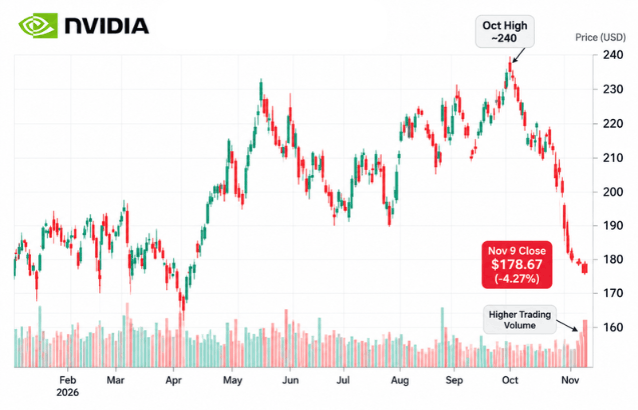
Nvidia (NASDAQ: NVDA) shares dropped to $181.60 on November 5. After a brief bounce, they slid another 4.27% on November 9 to close at $178.67. On November 8, CEO Jensen Huang publicly acknowledged that he had been unfaithful to his wife, and Nvidia’s board announced an independent investigation following reports of a potential foreign intelligence concern involving him.
This isn’t a normal sell-off, so it shouldn’t be judged like one. The real question is what could happen next, and what it means for stockholders, CFD traders and anyone thinking of buying.
Nvidia CEO Apology: What Happened?
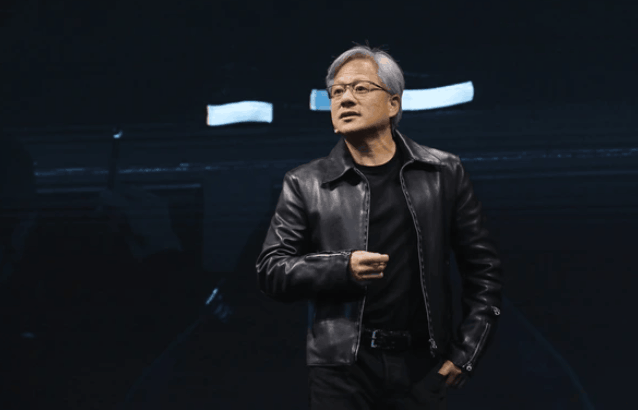
On November 8, Nvidia’s CEO Jensen Huang sent a message to Nvidia employees acknowledging his infidelity and apologising to his family, colleagues, board members, partners and shareholders.
But the story goes beyond his personal conduct. Separate reports raised concerns that he may have been targeted by a foreign intelligence effort involving a former executive at Singapore-based data-centre company Megaspeed International.
Nvidia’s board responded with an independent investigation, saying it had no reason to believe company secrets or US national security interests had been compromised. Huang has promised to cooperate fully. Nvidia and Huang have also been named in a proposed shareholder class-action lawsuit alleging that investors were misled over related disclosure matters. These are allegations, not established legal findings.
Why Did Nvidia Stock Fall So Sharply?
Interestingly, the November 5 drop came before the Nvidia CEO apology. It reflected wider concerns about AI infrastructure spending, political uncertainty and possible regulatory pressure on tech. Other semiconductor stocks took heavy losses too, so investors seemed to be reassessing the whole AI trade.
November 9 was different. The Nasdaq Composite gained 2.74%, yet Nvidia’s shares still fell 4.27%, which points to the leadership controversy as the driver. So the company is facing two separate pressures: doubts over the AI investment cycle and questions around its CEO.
It’s tempting to compare this with April 2025, when shares fell about 6.87% after new US export licensing requirements hit its H20 chips for China. That led to a $4.5 billion charge, and the market later recovered, with the Bank for International Settlements finding that roughly 75% of the S&P 500’s rebound through July was driven by developments unrelated to tariffs.
But that episode was a direct hit to earnings. This one is about leadership and governance, with no clear precedent, so the old playbook only goes so far.
What Does the Business Look Like Beneath the Headlines?
So far, nothing in the numbers suggests the business has weakened. In its second quarter of fiscal 2027, Nvidia reported:
Revenue: $96.2 billion, up 106% year over year
Data Centre revenue: $89 billion, up 117%
GAAP gross margin: 75%
Net income: about $59.7 billion
Shareholder returns: roughly $26 billion through buybacks and dividends
It also expects third-quarter revenue of around $108 billion, plus or minus 2%, without assuming any extra Data Centre compute revenue from China. That reassures investors that near-term growth isn’t riding on China, although further export restrictions could still affect longer-term opportunities.
Strong past results don’t guarantee future ones, though. AI spending sustainability, competition, valuation and regulatory risk all still matter.
What Could Happen Next?
Because this event is new, it helps to think in scenarios rather than lean on history.
1. The investigation clears quickly. If the board finds no compromise of company information and Huang stays in place without disruption, a chunk of the uncertainty could fade, and attention would return to earnings.
2. The story drags on. A slow investigation, lawsuit headlines and more reports could keep a lid on sentiment, even if the business performs well. This is where volatility tends to stay high.
3. Findings turn serious. If the investigation uncovers real governance problems, regulatory action or leadership disruption, the investment case changes. That’s a fundamental issue, not just a mood swing.
The next major checkpoint is the November 17 earnings announcement. Watch revenue against the $108 billion guidance, Data Centre growth and gross margins, and listen for any comments on leadership or the investigation.
How Should Investors Buy the Dip?
If you’re tempted to buy the dip, keep it disciplined:
Don’t try to call the bottom. Nvidia’s stock rebounded briefly after November 5 before falling again on November 9. Scaling in with smaller purchases leaves room for further weakness.
Wait for clarity where you can. Earnings and any update on the investigation may tell you more than the price chart does.
Size the position sensibly. Only commit what you could tolerate seeing fall further.
Know when the thesis is broken. A sustained AI spending slowdown, lower guidance, major export restrictions, serious investigation findings or leadership disruption would point to a real deterioration. Don’t keep averaging down just because the price is dropping.
Hold, Sell or Buy? What It Means for Each Type of Investor
The Nvidia CEO apology on its own isn’t a trading signal. What matters is how it changes your position, and that differs by investor.
Existing stockholders: hold or sell?
Nothing reported so far suggests the underlying business has weakened, so there’s a case for holding if your thesis is long-term AI demand and you can sit through volatility. But if your confidence rested heavily on Huang’s leadership, or Nvidia is an outsized part of your portfolio, it’s reasonable to reassess. Serious findings from the investigation would be the point to review your plan.
CFD traders: is it a sell signal?
Not automatically. Sentiment is clearly weak in the short term, but the stock is also moving on headlines in both directions, as November 9 showed when it fell while the Nasdaq rallied. With earnings on November 17, a short position faces the risk of a sharp rebound or an overnight gap, and leverage magnifies both. A sell signal makes more sense if news and price action confirm each other, with stops in place.
New buyers: is it a buy opportunity?
Possibly, but not just because the price fell. It becomes more attractive if the shares look cheap against long-term earnings potential and the investigation clears up. Until then, scaling in is safer than going all in.
So, is Nvidia stock a buy the dip opportunity? It could be, but the apology itself is not a buy signal, and it isn’t a sell signal either. The earnings and the investigation will tell you far more.
FAQ
Why did Nvidia CEO Jensen Huang apologise?
Jensen Huang apologised on November 8, 2026, after acknowledging that he had been unfaithful to his wife. The controversy coincided with a separate independent board investigation.
Why is Nvidia stock falling?
Nvidia stock has faced pressure from AI spending concerns, regulatory uncertainty, geopolitical risks and controversy surrounding CEO Jensen Huang.
Is Nvidia stock a buy-the-dip opportunity?
Potentially, if Nvidia maintains its strong earnings growth and competitive position. However, investors should consider the ongoing investigation and valuation risks.
Share Now
Disclaimer:This content is provided for informational purposes only and does not constitute, and should not be construed as, financial, investment, or other professional advice. No statement or opinion contained herein should be considered a recommendation by Ultima Markets or the author regarding any specific investment product, strategy, or transaction. Readers are advised not to rely solely on this material when making investment decisions and should seek independent advice where appropriate.
Thank you for visiting the Ultima Markets website. Please note that this website is intended for individuals residing in jurisdictions where access is permitted by law. Ultima and its affiliated entities do not operate in your home jurisdiction.
By clicking ‘Acknowledge’, you confirm that you are entering this website solely on your own initiative and not as a result of any specific marketing outreach. You wish to obtain information from this website based on reverse solicitation principles, in accordance with the applicable laws of your home jurisdiction.