This website is managed by Ultima Markets’ international entities, and it’s important to emphasise that they are not subject to regulation by the FCA in the UK. Therefore, you must understand that you will not have the FCA’s protection when investing through this website – for example:
You will not be guaranteed Negative Balance Protection
You will not be protected by FCA’s leverage restrictions
You will not have the right to settle disputes via the Financial Ombudsman Service (FOS)
You will not be protected by Financial Services Compensation Scheme (FSCS)
Any monies deposited will not be afforded the protection required under the FCA Client Assets Sourcebook. The level of protection for your funds will be determined by the regulations of the relevant local regulator.
Note: UK clients are kindly invited to visit https://www.ultima-markets.co.uk/. Ultima Markets UK expects to begin onboarding UK clients in accordance with FCA regulatory requirements in 2026.
If you would like to proceed and visit this website, you acknowledge and confirm the following:
1.The website is owned by Ultima Markets’ international entities and not by Ultima Markets UK Ltd, which is regulated by the FCA.
2.Ultima Markets Limited, or any of the Ultima Markets international entities, are neither based in the UK nor licensed by the FCA.
3.You are accessing the website at your own initiative and have not been solicited by Ultima Markets Limited in any way.
4.Investing through this website does not grant you the protections provided by the FCA.
5.Should you choose to invest through this website or with any of the international Ultima Markets entities, you will be subject to the rules and regulations of the relevant international regulatory authorities, not the FCA.
Ultima Markets wants to make it clear that we are duly licensed and authorised to offer the services and financial derivative products listed on our website. Individuals accessing this website and registering a trading account do so entirely of their own volition and without prior solicitation.
By confirming your decision to proceed with entering the website, you hereby affirm that this decision was solely initiated by you, and no solicitation has been made by any Ultima Markets entity.
Ultima Markets does not have an establishment in Singapore and does not operate from Singapore.
Ultima Markets does not provide products or services to citizens or residents of Singapore, and account applications from Singapore citizens or residents will not be accepted.
If you are a citizen or resident of Singapore, please do not open an account or use Ultima Markets’ products or services.
By selecting “Acknowledge and Continue Browsing”, you confirm that you are accessing this website on your own initiative and that your access is not the result of any direct marketing, targeted advertising, solicitation, or promotional activity by Ultima Markets.
Nothing on this website constitutes an offer, solicitation, or promotion of products or services in any jurisdiction where such activity is prohibited. You are responsible for ensuring that your access to and use of this website complies with applicable local laws and regulations.
Explore the different types of money, from commodity money to digital currencies like Bitcoin and CBDCs. Learn how money has evolved in today's economy.
Money sits at the heart of every economy. It shapes how we trade, invest and decide where our resources go. Over the centuries, it has changed form again and again, from cattle to cypto, adapting to the needs of society and the technology of the day.
In this article, we’ll walk through the main types of money, where each one came from and the role it plays in today’s economy.
Commodity Money: Where It All Began
Before modern money existed, people relied on barter, swapping goods and services directly. It sounds simple, but it was a headache. Barter depends on a “coincidence of wants”, meaning both sides have to want what the other is offering at the very same time. That’s not easy to pull off.
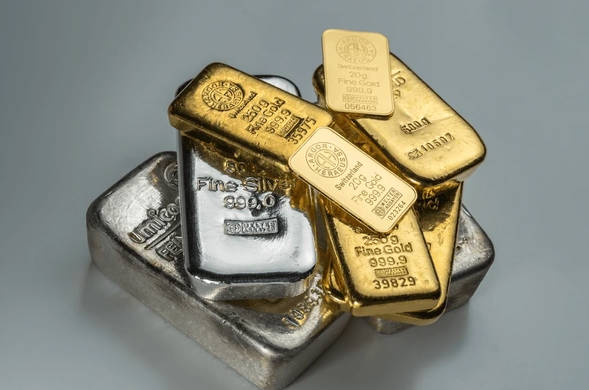
The fix was commodity money, which is built on items with intrinsic value, things that are worth something in their own right. Cattle, seashells, salt and precious metals all served as money because everyone recognised them as valuable.
Examples of commodity money:
Gold and silver: Precious metals were widely used as money, often minted as coins.
Livestock and grain: In early farming societies, these were essential goods, so they doubled as currency.
Commodity money did the job, but it had its problems. Hauling large amounts around was awkward, and values could swing. That pushed societies to look for something more flexible.
What Makes Money Work? The Key Characteristics
Whatever the types of money in use, a few qualities decide whether it actually works in an economy:
Durability: It has to survive repeated use without wearing out, so it keeps its value.
Portability: It should be easy to carry and transfer.
Divisibility: It must break down into smaller units, so it can handle purchases of any size.
Recognisability and uniformity: Everyone in the system should be able to identify it and trust it.
Scarcity: Supply needs to be limited to protect its value and prevent inflation.
Today, secure digital systems help maintain these qualities, which is why money remains such a reliable tool for exchange and for storing value.
Representative Money: A Step Towards Modern Currency
Representative money came along to solve the headaches of commodity money. Instead of being valuable itself, it represents a claim on a commodity such as gold or silver, which you could swap for the real thing on demand. That made trade much easier, because nobody had to physically carry valuable goods around.
The best-known example is the gold standard, where paper money could be exchanged for gold. It worked for a while, but became impractical as the global economy grew, and it was eventually abandoned in favour of fiat money.
Example of representative money:
Gold and silver certificates: In the US, these were paper claims on gold or silver, which smoothed trade without moving the metal itself.
It streamlined transactions, but economies soon needed a more flexible and scalable system, and representative money gave way to fiat.
Fiat Money: The Birth of Modern Currency
Fiat money is the most common form of money today. Unlike commodity or representative money, it has no intrinsic value. Its worth comes from the trust people place in the government or central authority behind it. Governments declare it legal tender, which means it must be accepted for payments within the country.
What defines fiat money:
No intrinsic value: It has value because the government says so, not because a physical commodity backs it.
Issued by governments: Central banks create and regulate it, which makes it the most widely accepted form of currency.
Fiat money is portable, divisible and universally accepted, and it gives governments the ability to manage economic policy through monetary control. The catch is that some economists argue it isn’t always a dependable store of value, because of inflation and government policy.
Electronic Money (E-Money): The Digital Revolution
The internet and digital technology brought us electronic money, or e-money, which is money that’s stored and moved digitally.
Common forms of e-money:
Bank transfers and digital payments: Services like PayPal, Venmo and mobile banking apps make moving money quick and convenient.
Cryptocurrencies: Digital currencies such as Bitcoin and Ethereum are decentralised and built on blockchain technology, offering an alternative to traditional fiat money.
Digital wallets: Platforms like Apple Pay and Google Pay store money electronically for fast, secure payments.
E-money has changed how people transact, bringing efficiency, convenience and global reach. Cryptocurrencies and digital wallets in particular are reshaping the financial landscape, opening up new ways to pay and invest.
Cryptocurrency: A New Frontier in Digital Money
Cryptocurrency changes how we think about money altogether. Unlike traditional fiat currencies, cryptocurrencies are decentralised, so no central authority or government controls them. They rely on blockchain technology to keep transactions secure.
Popular cryptocurrencies:
Bitcoin: The first and best-known cryptocurrency, often called “digital gold” because of its fixed supply and growing use as a store of value.
Ethereum: Known for its smart contract capabilities, it lets people build decentralised applications (dApps) and has helped drive the rise of decentralised finance (DeFi).
Ripple (XRP): Designed for fast, low-cost international payments, it tackles the inefficiencies of traditional cross-border transfers.
Cryptocurrencies bring real benefits, including decentralisation and security. But they’re still volatile and face regulatory challenges, so while they’re a new frontier in digital money, widespread adoption is still a work in progress.
The Future of Money: CBDCs and Stablecoins
The next big step in the evolution of the types of money we use is the arrival of Central Bank Digital Currencies (CBDCs) and stablecoins. Both aim to combine the strengths of traditional fiat with the advantages of digital technology.
Why CBDCs matter:
Government-backed stability: They offer the stability of fiat money with the added efficiency and security of digital transactions.
Faster, cheaper transactions: By using blockchain or similar technology, CBDCs can cut costs and speed up payments.
Enhanced monetary control: Central banks can use them to manage the money supply directly, giving them more control over inflation and economic stability.
Several countries, including China and the European Union, are already testing or developing CBDCs. They could become a central part of the global financial system, reshaping payments, economic policy and the future of money.
Examples of stablecoins:
Tether (USDT): Pegged 1:1 to the US dollar, offering stability for digital transactions.
USD Coin (USDC): Fully backed by the US dollar, which supports transparency and security.
Dai (DAI): A decentralised stablecoin on the Ethereum blockchain, giving people a trustless way to store value.
Stablecoins are growing in popularity for cross-border payments, remittances and DeFi applications. They act as a bridge between traditional and digital finance.
Conclusion
Money has always changed to suit the needs of the societies using it. From commodity money in ancient times to fiat and cryptocurrencies today, it keeps adapting to global demands. CBDCs and stablecoins could transform things further, offering faster, more efficient and more secure ways to pay.
Understanding the different types of money and how each one works is essential for navigating the future of finance. Whether you’re a trader, an investor or simply an everyday consumer, staying informed about how money is evolving will help you make smarter financial decisions.
FAQ
What are the main types of money?
The main types of money are commodity money, representative money, fiat money, electronic money, cryptocurrency, and the newer CBDCs and stablecoins.
Is cryptocurrency real money?
Cryptocurrencies like Bitcoin and Ethereum work as a form of digital money, but they are decentralised, volatile and still face regulatory challenges. Unlike fiat currency, no government declares them legal tender.
What are the key characteristics of money?
Money needs to be durable, portable, divisible, recognisable and uniform, and scarce. These qualities help it work as a reliable medium of exchange and store of value.
Share Now
Disclaimer:This content is provided for informational purposes only and does not constitute, and should not be construed as, financial, investment, or other professional advice. No statement or opinion contained herein should be considered a recommendation by Ultima Markets or the author regarding any specific investment product, strategy, or transaction. Readers are advised not to rely solely on this material when making investment decisions and should seek independent advice where appropriate.
Thank you for visiting the Ultima Markets website. Please note that this website is intended for individuals residing in jurisdictions where access is permitted by law. Ultima and its affiliated entities do not operate in your home jurisdiction.
By clicking ‘Acknowledge’, you confirm that you are entering this website solely on your own initiative and not as a result of any specific marketing outreach. You wish to obtain information from this website based on reverse solicitation principles, in accordance with the applicable laws of your home jurisdiction.